

Key Takeaways
- AI slop isn't an AI problem. It's a process problem, and it's one that skilled creative talent are uniquely positioned to solve.
- The most successful AI campaigns all start with a strong human idea, crafted with exceptional skill. Rather than eliminating the need for Creative Directors, Designers, and Copywriters, AI makes their ability to execute that idea more essential than ever.
- Workflow mapping, not tool adoption, is the real starting point for sustainable AI integration.
- Organizations that moved too fast have a path forward, but it starts with an honest audit of where human oversight was removed too early.
Listen: Why AI makes skilled creatives more essential.
At Aquent, we have integrated AI into our core operations, leveraging it across the entire workflow. This includes how we source and screen talent, as well as how we create brand assets, editorial imagery, and write marketing copy. To accomplish this, we utilize a diverse suite of advanced platforms and tools, such as Gemini, Claude, Firefly, Midjourney, Figma Make, and Runway. AI is one of the most powerful and dynamic creative tools I've worked with in my career.
But here's what I've also learned: AI is only as good as the person operating it. And that's where a lot of brands have gotten into serious trouble.
The price of moving too fast
When AI tools matured rapidly, the business case seemed obvious, reduce headcount, scale content production, cut costs. Some organizations moved quickly, eliminating Web Developer, Designer, and production roles with real confidence that AI could fill the gap. For a while, it looked like it might work.
It didn't.



There's a price to pay for leaning too hard on AI, letting it run wild without governance, review, or interrogation of the output. We're seeing those consequences everywhere now. Social feeds are saturated with what's become known as “AI slop”: content that's technically competent but emotionally hollow. Consumers have developed a sharp eye for it, and it's shaping how they feel about the brands producing it. Google has taken notice too, updating its E-E-A-T guidelines to penalize content that doesn't add genuine knowledge or perspective to the broader conversation.
The backlash isn't hypothetical. J.Crew's AI-generated campaign became a cautionary tale when audiences spotted images riddled with AI errors—a man's foot facing backward, hands melting into bike handlebars, details that somehow cleared every layer of review. The damage wasn't just reputational; it was a signal to customers that the brand had deprioritized human craft. In London, a massive AI-generated Christmas mural installed along Riverside Walk in Kingston upon Thames disturbed holiday crowds with warped faces and grotesque imagery, drew widespread mockery on social media, and was ultimately torn down. And when Coca-Cola rebooted its iconic Holidays Are Coming campaign using AI, the visuals suffered from obvious glitches where trucks changed shape mid-scene and wheel counts shifted. The creative community ridiculed the execution, pointing out that AI couldn't maintain visual consistency. Coca-Cola's case shows that using AI to mess with legacy brand assets risks throwing away decades of emotional connection.
That's the core of the problem. We're putting computer output in front of people and trying to pass it off as emotional content. It feels synthetic, it leaves people with a bad taste in their mouth, and increasingly, it's making them skeptical of the brands behind it.
AI doesn't replace creative roles—it demands them
Here's the part that gets lost in the conversation: AI didn't eliminate the need for Creative Directors, Designers, and Copywriters. It made them more essential.
The reason some brands are producing AI content that feels lazy and generic isn't because AI is a bad tool. It's because they removed the skilled people needed to operate it well. A Creative Director brings brand intuition, taste, and strategic judgment that no prompt can replicate. Art Directors and Designers see the oddity in the background, the finger that's slightly wrong, the composition that's technically fine but emotionally flat. A Copywriter catches the buzzword that's off-brand, the sentence that sounds generated, the paragraph that stretches the truth just enough to erode trust.
AI doesn't make those skills obsolete. It depends on them. The person in the seat has to have institutional knowledge—a deep understanding of the brand, the customer, the product, and the goals—before they can guide AI toward a workflow or output worth using. Without that expertise behind the wheel, you're not saving money. You're just producing mistakes faster.
What good AI integration actually looks like
The brands succeeding with AI aren't the ones that moved fastest. They're the ones that moved most carefully, with the right talent in the right roles. The difference comes down to a single distinction, AI is a tool that assists human work, not a replacement for it.
The principle: Always bring something to the table
This connects directly back to what Google's E-E-A-T guidelines are really asking of content creators: Does this reflect genuine experience, expertise, and knowledge? We take that seriously, not just as an SEO consideration, but as a creative standard. That means never simply asking AI to “create an image” or “write some copy” and shipping what comes back. Every output starts with meaningful human input. You have to bring something to the table first: brand knowledge, creative direction, strategic context. That's what separates content that adds to the creative pool from content that just adds to the noise.

What this looks like in practice
The brands getting this right all follow the same principle. When Ferrero and Ogilvy Italy launched theNutella Unica campaign, they didn't hand AI a blank canvas. They built a custom algorithm around Nutella's established brand identity, with defined color palettes, pattern logic, and design constraints, then used it to generate 7 million unique jar labels, each one unmistakably Nutella. Every jar sold out within a month. The AI executed brilliantly, but only because human creative thinking defined the boundaries it worked within.
Nike'sNever Done Evolving campaign is another example that gets this exactly right. Created with agency AKQA to honor Serena Williams' retirement, the campaign used machine learning to analyze footage from every match of her career, modeling her decision-making, shot selection, and movement across different eras, then simulated a virtual match between her 1999 self and her 2017 self. The concept was entirely human: a deeply felt tribute to what it means to never stop evolving. AI made the impossible execution possible. The campaign won the Cannes Lions Digital Craft Grand Prix and generated over 1,000% more organic views than Nike's typical content. In both cases, experienced creative people led, and AI enabled what they built.
The human is the guiding light
The Nutella and Nike examples share something important beyond their results. In both cases, a human had an idea worth executing before anyone opened an AI tool. That's not a coincidence. It's the pattern.
What I've learned leading creative work through this AI era is that the quality of what comes out is always a direct reflection of the thinking that went in. A lot of organizations believed AI was almost magical, that it could simply take over and deliver, and that belief led to some really significant bets that didn't pay off. The Creative Director who knows the brand instinctively, the Designer who spots the composition that's technically fine but emotionally flat, the Copywriter who catches the sentence that sounds generated: these are the people who catch what AI gets wrong. They're not redundant to the process. They're what make the process work.
The Skill brand: A case study in leading with humans first
To make this concrete, here's how that philosophy played out when building the Skill brand from the ground up.
Skill is Aquent's AI-native talent platform, so from the start, we knew the brand had to embody what we believe about AI: powerful technology, human judgment in the loop. We developed the identity in partnership with Pentagram, and before a single visual was created, we spent three months in human conversation, wordplay, conceptual alignment, and strategic exploration. What does Skill represent? What does it feel like to be at the cutting edge of recruiting technology? What visual language communicates precision, intelligence, and speed without feeling cold? Those questions took time and human engagement to answer. No amount of prompting would have gotten us there faster.
Once we had creative territories in alignment, we brought AI into the process deliberately. AI-generated photography became part of the Skill brand expression, intentionally, because an AI-native brand using AI imagery feels authentic. We used AI to build out inclusive profile assets and brand visuals at scale, with a tightly defined prompt process that kept everything consistent. A cross-functional team of Designers, Art Directors, Copywriters, and Web Developers ran a traditional design sprint process around it, with human oversight at every stage.
The result is a brand that feels genuinely AI-native without feeling cold or unguarded, because the humans never left the room.
Finding your footing: Practical advice for getting AI right
Whether you're just beginning to integrate AI or quietly reckoning with having moved too fast, the path forward is the same: get intentional.


Map your workflow before you automate it
The first question isn't “What can AI do?” it's “Where does AI actually fit?” Start by mapping your creative and content workflow end to end, every stage from brief to publish. Then ask honestly: Where is the work repetitive, high-volume, or execution-heavy? That's where AI tends to add the most value with the least risk. Conceptual development, brand strategy, and creative direction are harder places to lean on AI because they require judgment, taste, and institutional knowledge that can't be prompted. Production, asset variation, and copy drafting are where it tends to shine when given the right inputs. Resist the urge to automate everything at once. Start narrow, build your process, prove it out, then expand.
Identify and invest in skilled talent who can operate AI well
This is the part most organizations are still underestimating. AI doesn't run itself. It needs people who understand the brand deeply, can craft precise and effective prompts, know how to evaluate output critically, and have the creative instincts to push it further. That's not a junior task. It's a senior creative skill set that happens to involve a new kind of tool.
Look for people who combine domain expertise with curiosity about AI. A great designer who's genuinely exploring what these tools can do is far more valuable than someone who knows the tools but doesn't understand what good looks like. And once you find those people, invest in them. Give them time to experiment, fail, and build processes worth scaling. The organizations building real competitive advantage with AI right now are the ones nurturing this talent, not replacing it.
Define your philosophy before you set your process
Before you build workflows, write guidelines, or train any model, your organization needs to agree on what it believes about AI. What role do you want it to play? What does “human in the loop” mean for your team specifically? Where do you draw the line between AI-assisted and AI-generated, and does that line need to be visible to your audience? These aren't abstract questions. They shape every practical decision that follows. At Aquent, our philosophy is clear: AI is a powerful tool, humans are the guiding intelligence, and nothing goes out without review. That clarity makes the day-to-day decisions faster and the work more consistent.
If you've gone too far, it's not too late
Many organizations are quietly having a reckoning after moving too quickly with AI integration. If that resonates, the honest first step is tracing the breakdown: Where did AI get trusted with decisions it shouldn't have owned? Where was human oversight removed too early? That audit usually points clearly to where the process needs to be rebuilt.
Walking it back doesn't mean abandoning the investment. It means recalibrating, bringing the right people back into the right roles, rebuilding review processes, and approaching AI the way it was always meant to be used, as a tool that makes skilled people more powerful, not a substitute for having them at all. It's never too late to find that balance. The brands that do will be the ones that come out ahead.
About the author
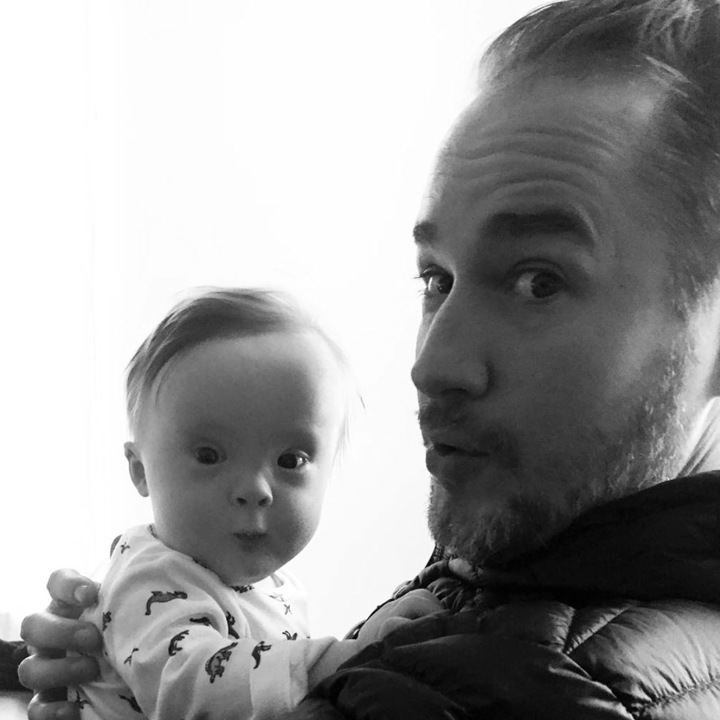
Andrew Morse is Global Executive Creative Director at Aquent and Skill, where he leads brand creative strategy and design across a worldwide portfolio. With more than two decades of experience spanning agency and in-house environments, Andrew has led creative teams for iconic brands including Adidas, American Express, LEGO, Samsung, GM, and P&G — earning recognition from Cannes Lions, Clios, Effies, Webby, Anthem, Digiday, and W3, among others. His agency career includes creative leadership roles at Isobar (now Dentsu Creative) and Digitas, where he drove digital transformation and grew landmark accounts into multimillion-dollar partnerships. Andrew holds a BFA in Graphic Design and Photography, Cum Laude, from the University of Massachusetts Amherst, and is based outside Boston.
Latest.

The entry-level creative role isn’t dead. It’s been rebuilt.
Leadership & Management, Retention Strategies, Talent Acquisition & Recruitment


AI portfolio search for creative hiring, meet Milton.
Leadership & Management, Engineering & Technology, Innovation & Emerging Tech, Talent Acquisition & Recruitment



Build your recruiting pipeline before you need it.
Retention Strategies, Talent Acquisition & Recruitment